
When Tree Branches Shade a Roof: Creating an Arborist Brief
A branch near a roof, gutter or power line needs a careful assessment, not a quick cut made from a ladder. Start with the reason for concern and the tree's surroundings.
From a safe position on the ground, photograph the tree, roof edge and any areas where leaves accumulate. Note whether branches appear to touch the building, whether the problem changes in windy weather and whether there are visible damaged limbs. Do not approach a damaged tree or overhead electrical equipment. Contact the relevant utility or emergency service if a line is affected.
An appropriately qualified arborist can assess tree condition, structure and pruning options. Explain whether the goal is clearance, access, reduced debris or another concern. Ask how the recommended work will affect the tree over time and whether alternatives are available. Avoid specifying a percentage of canopy removal without professional advice.
Discuss equipment access, protection of the property, removal of debris and whether any permits or approvals are needed. Requirements vary by location and tree status. Check the contractor's relevant qualifications and insurance.
Request a written description of the proposed work and an explanation of any future monitoring. Take new photos from the same safe location after completion. The objective is a better-managed relationship between tree and building, not an arbitrary reduction in the size of the tree.
In the US, verify local tree-care requirements and contact the utility about any branch that may threaten a power line.
US EPA WaterSense — Landscaping tips
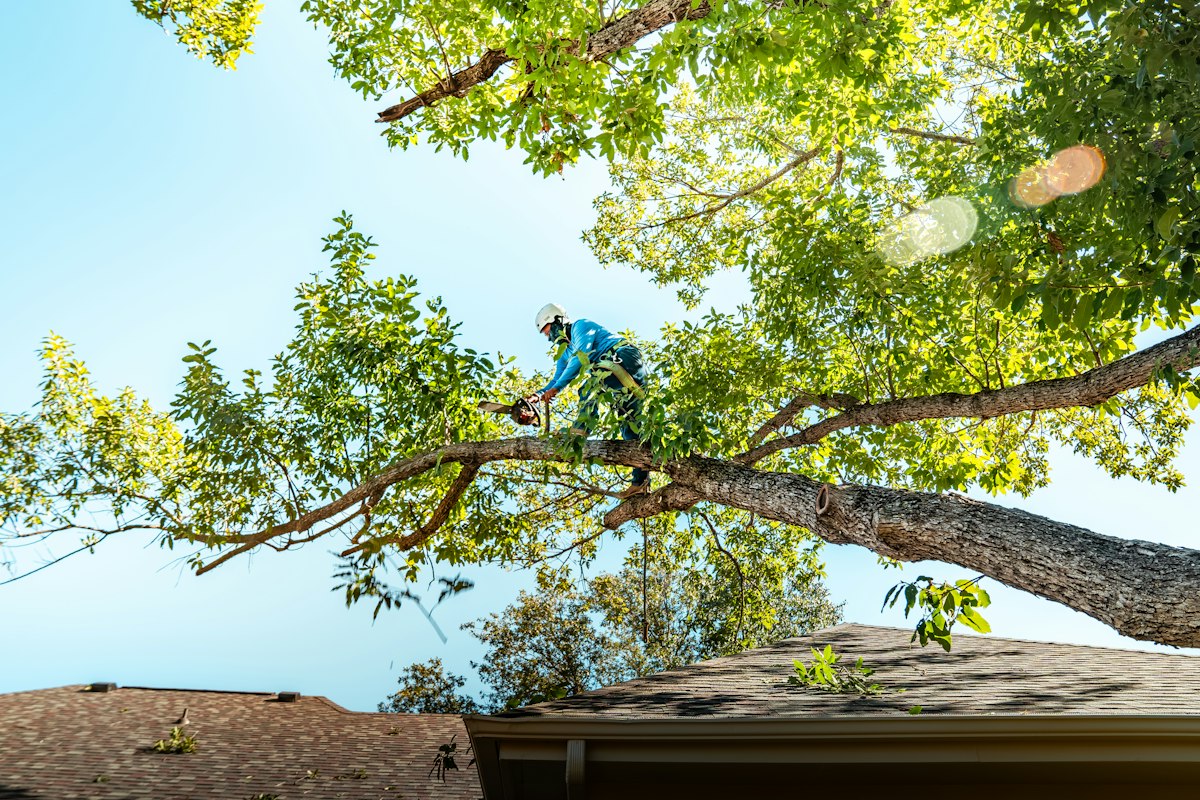
Photo: Zack Masters / Unsplash. Stock image for context; not a photograph of a project reviewed in this article.