Planning a Patio for Windy and Exposed Gardens
A patio that looks inviting on a calm day may be uncomfortable when wind passes between buildings. Consider shelter, drainage and circulation together.
Observe the proposed seating area on several days. Note where gusts appear around the house and whether cushions or lightweight objects are frequently displaced. The wind direction can differ from one part of a garden to another, particularly near walls and narrow passages. Invite the designer to examine the space under ordinary conditions rather than judging from a single photograph.
A planting screen, fence or appropriately designed outdoor structure may change how the space feels. A completely solid obstruction can also create turbulence on the other side. Ask a professional to explain the proposed arrangement and any applicable rules or structural requirements for wind loads. Do not attach improvised screens to structures not designed for them.
Choose outdoor furniture with a suitable storage arrangement for loose items. Consider how screens or plants will be cleaned, trimmed or repaired and whether there is enough space to move around them. Keep paths clear and avoid obstructing drainage outlets or necessary access.
Move your existing chairs to several possible locations before ordering paving or fixed seating. Compare shelter, evening light and the route from the house. A modest change in patio position can sometimes be more effective than a costly addition fitted after construction.
For a UK garden, consider whether a proposed permanent screen needs permission, particularly near a boundary.
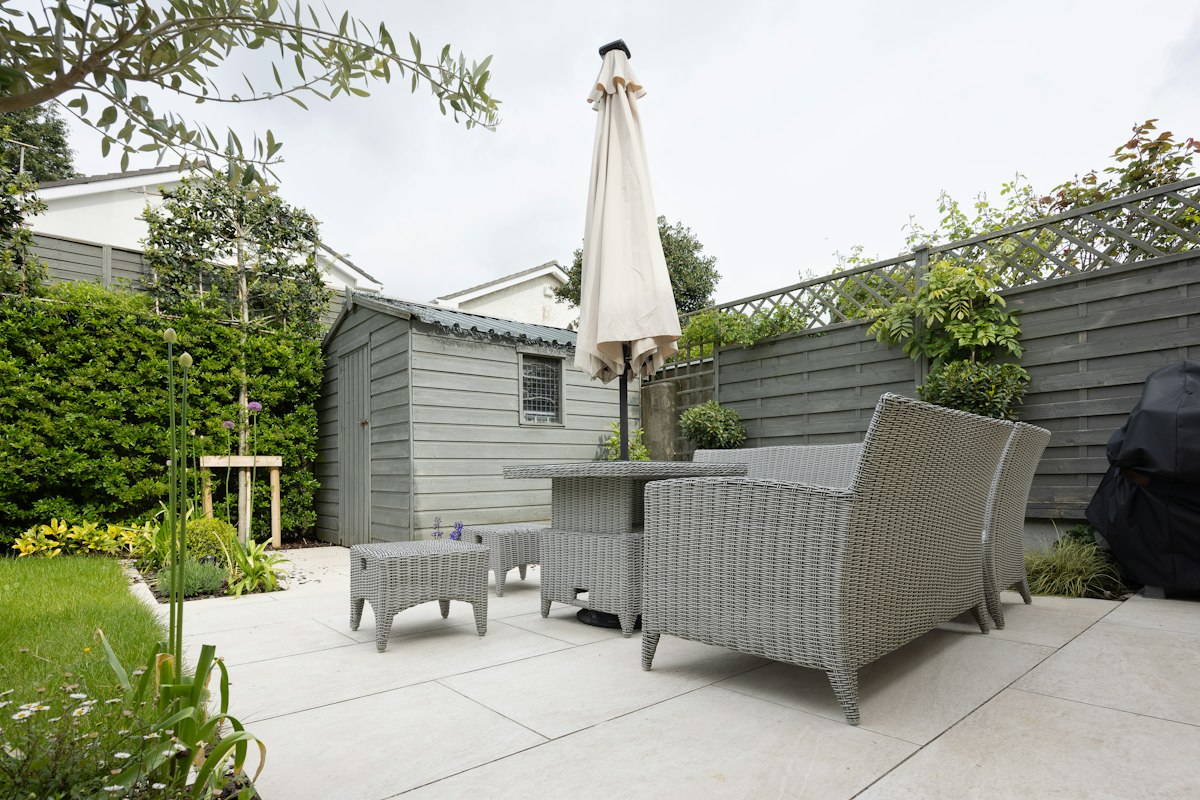
Photo: Tile Merchant Ireland / Unsplash. Stock image for context; not a photograph of a project reviewed in this article.