
Planting a Privacy Hedge Without Losing the Whole Garden Edge
A dense hedge can create a pleasant garden boundary, but a plant's mature width determines how much useful space remains beside it.
Stand at the points where privacy is actually needed. Tall screening may be important opposite a window but unnecessary along an unused section of boundary. Consider the view from inside the house and from the seating area, as well as shadows cast into neighbouring spaces. Record these observations on a simple garden plan.
Ask the nursery or designer about the mature height and spread of the plants under local conditions, expected maintenance and their tolerance of the site's soil and exposure. Do not place a row of plants solely according to the small pots on display. Leave suitable room for access to both the hedge and any fence that requires repairs.
Check the actual property boundary and relevant local restrictions before planting or constructing screens. Discuss shared maintenance access with neighbours where appropriate. Avoid planting close to utilities or building elements without advice about the species and location.
A young hedge will not provide the same coverage as a mature one. Discuss temporary screening if needed, and allow for establishment and replacement of failed plants. Select the arrangement for its long-term size and maintenance cost, not just the immediate effect of tightly spaced young plants.
If you live in the UK, check boundary responsibilities and local guidance before selecting a hedge that will require substantial maintenance.
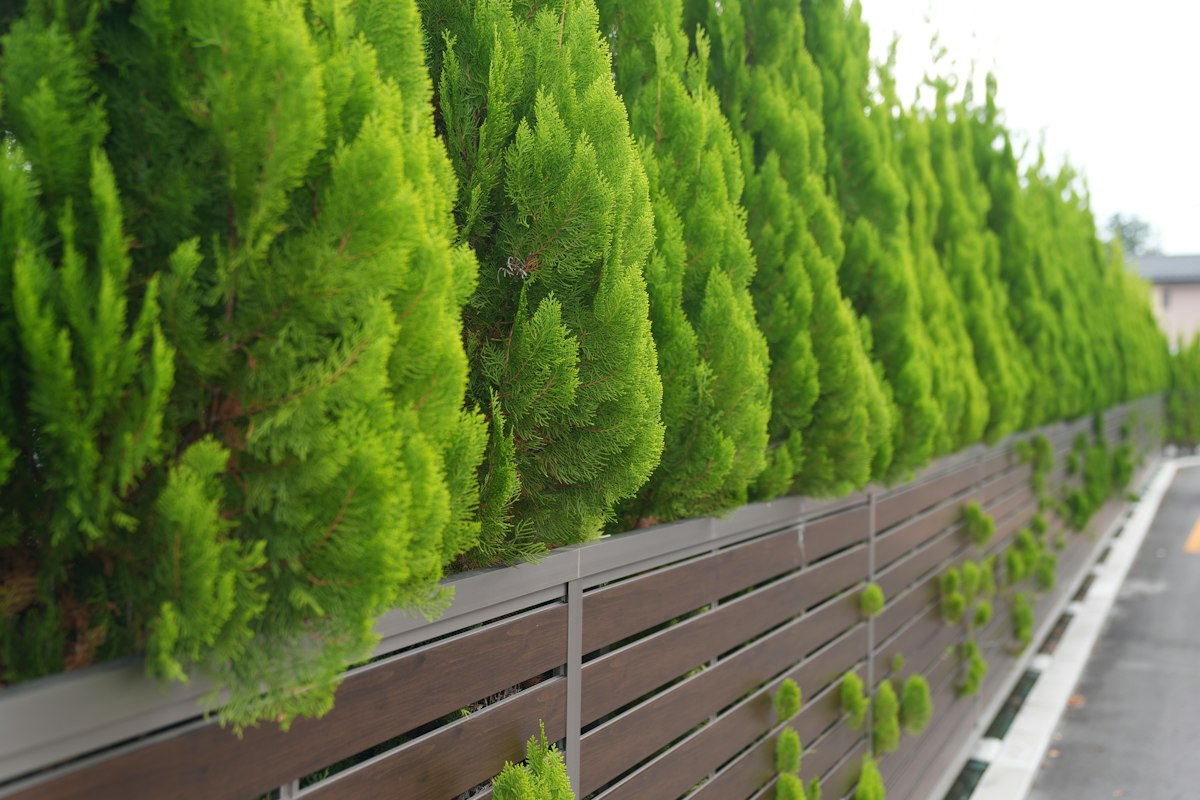
Photo: Gang Hao / Unsplash. Stock image for context; not a photograph of a project reviewed in this article.