
How to Choose Mulched Garden Beds That Are Easy to Water
Mulch can help manage moisture, but it must fit the plants, soil and irrigation arrangement. A neat-looking bed alone is not proof of suitable watering.
Check the existing planting bed before choosing a covering. Note the condition of the plants, exposed soil and any water running onto paths. If irrigation is installed, observe where it delivers water. Different mulch materials have different appearance, breakdown and maintenance needs, so ask a local supplier which options fit the planting.
Follow species-appropriate advice about mulch type and depth. Avoid creating piles directly against trunks or stems, and keep building clearances appropriate to local conditions. If there is an existing weed problem, decide how it will be managed before covering the bed rather than expecting a new layer to solve every issue.
A dry-looking mulch surface does not necessarily mean the underlying soil is dry. Observe soil moisture and plant condition using a method appropriate to the bed. Where water is being wasted or failing to reach the intended area, ask an irrigation installer to assess coverage.
Record what was applied and when, then monitor how it changes through the season. Keep the material off paths and away from drainage points. A useful mulch arrangement supports the planting and can be maintained without repeatedly undoing the irrigation layout.
For US beds, a local extension service can help determine suitable mulch for the plants and conditions.
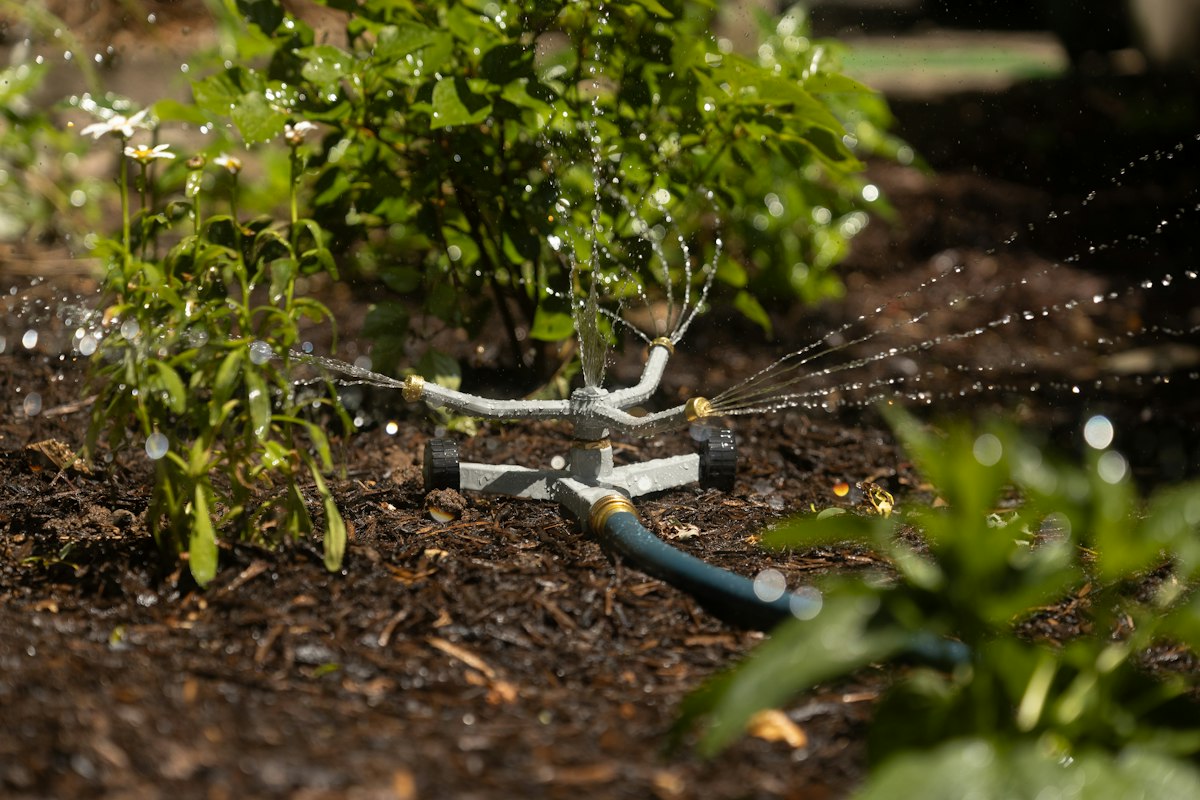
Photo: benjamin lehman / Unsplash. Stock image for context; not a photograph of a project reviewed in this article.